



Your Home Gym: A Convenient Recovery Corner
Your home gym can be the most convenient recovery corner you’ll ever own. A thoughtful home gym makes rest and progress possible because you train smarter, not just harder. With the right tools you recover faster and return stronger.
Setting up a recovery station matters, especially after heavy lifts or long cardio. Muscles need targeted care, and consistent recovery prevents setbacks. Therefore the gear you choose should solve pain, improve mobility, and fit your space.
In this guide we cover the essentials for at-home regeneration. We’ll explain how foam rollers reduce tightness, when to reach for a massage gun, and why targeted rollers speed repair. Also we’ll share quick 10-minute routines, space-saving setup tips, and product picks like FlexRoll, Ape Gun, MyoFusion, and ElasticBands.
Whether you have a garage gym, spare room, or a small apartment corner you can build a simple, powerful recovery routine. Read on to make your home gym a place that helps you train harder, recover faster, and stay consistent.
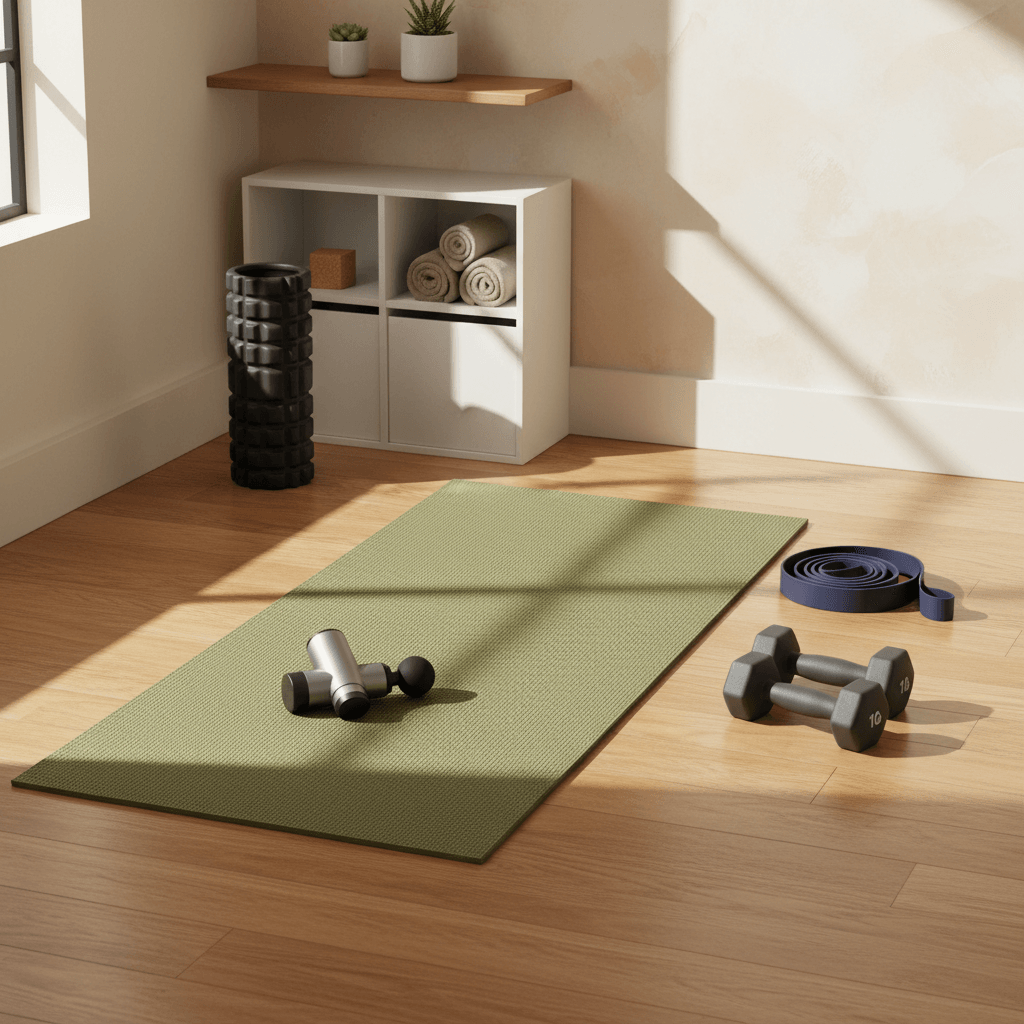
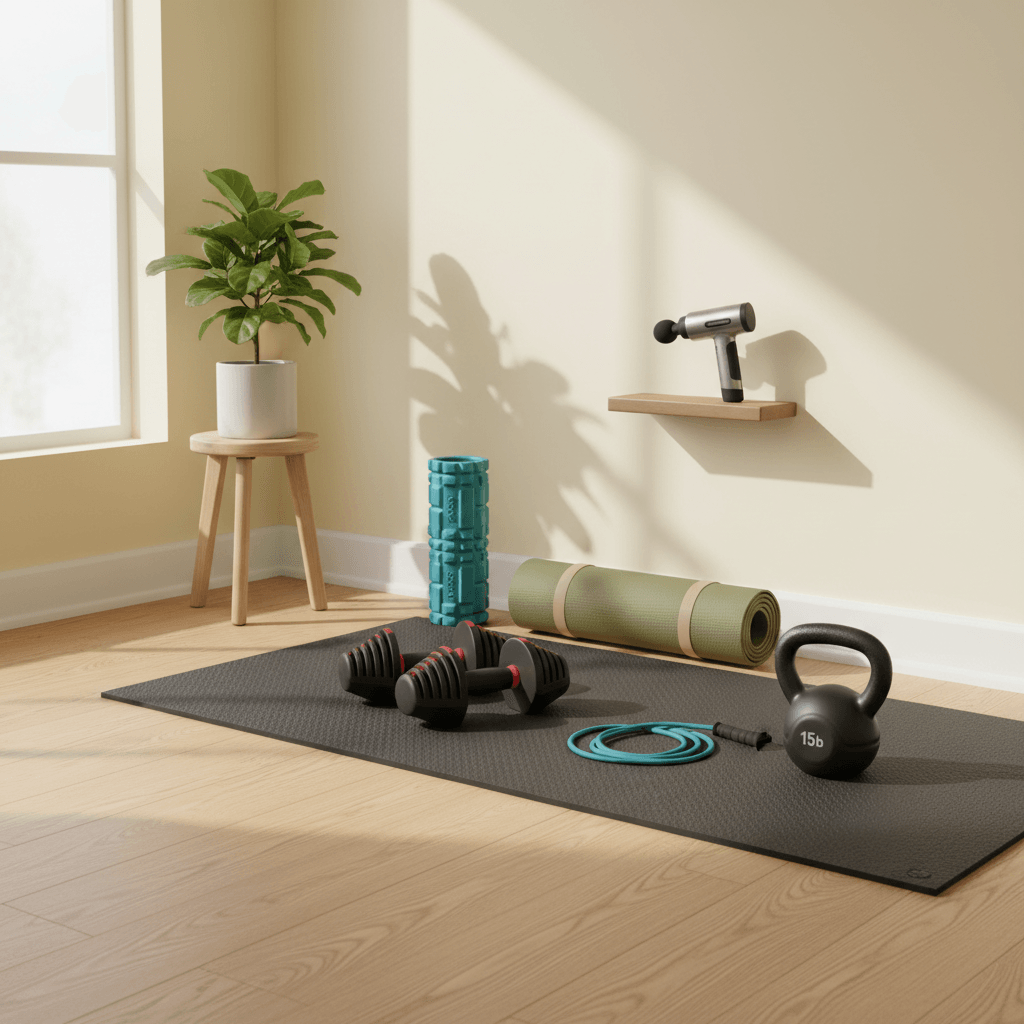
Essential equipment for your home gym
Build a dependable kit that covers strength, mobility, and recovery. Start small and grow the space over time. Also plan for storage and safety because clutter kills momentum.
Equipment checklist
- Free weights — Adjustable dumbbells or a dumbbell set give the best value. They save space and scale with your progress.
- Barbell and plates — For compound lifts, a barbell beats machines. However choose this only if you have ceiling height and floor protection.
- Adjustable bench — A sturdy bench unlocks presses, rows, and split work. Aim for 0 to 90 degree adjustments.
- Kettlebell or two — Great for swings, carries, and mobility flows. They add dynamic strength quickly.
- Pull up bar or rig — For vertical pulling and core work. Mount it securely to studs or use a freestanding rig.
- Cardio option — A compact rower or bike fits most garages and small rooms. Choose based on preferences.
- Resistance bands — For warm ups, accessory work, and travel. Also they pair well with bodyweight circuits.
- Recovery tools — Foam roller, percussion device, and targeted rollers speed regeneration. For example, foldable travel rollers like FlexRoll work for small spaces.
- Flooring and matting — Protect your subfloor and equipment. Use interlocking mats or thick rubber tiles.
Space and layout tips
- Measure your ceiling height first because overhead lifts need room. If your ceiling is low then prioritize dumbbells and cables.
- Place heavy items near reinforced flooring. Otherwise add a plywood layer or rubber underlayment.
- Allow a 3 foot buffer around a bench or squat area for safe movement and spotting.
- Create a dedicated recovery corner with easy access to rollers, a massage gun, and a mat. This encourages daily use.
Evidence and expert notes
Research shows foam rolling helps range of motion and recovery, although effects vary. See PubMed for a recent review. Moreover the NSCA outlines foam rolling benefits and practical use: NSCA. Also ACE covers percussion therapy and recovery tactics: ACE.
Practical advice from the trenches
- Start with versatile pieces rather than single-use gadgets. For example, adjustable dumbbells replace many plates.
- Keep recovery tools visible because people use what they see. Therefore place rollers and a massage gun by your mat.
- If you have kids or pets then lock small weights away and secure tall rigs.
- One enthusiast put it simply: “Go all-in if you can.” Meanwhile consistency matters more than a perfect setup.
Want a quick light read or a related perspective? See these posts: The Truth About Foam Rollers, Sensory-Based Emotional Regulation, Ground Beef Cottage Cheese Queso.
Equipment comparison for your home gym
Below is a quick comparison to guide gear choices. Use it to match goals, budget, and space. Therefore you can pick what fits your life.
| Equipment | Typical price range | Usability (versatility) | Space efficiency |
|---|---|---|---|
| Adjustable dumbbells | $200 to $800 | High — replaces many weights | Very high |
| Barbell and plates | $300 to $1,200+ | Very high — best for compound lifts | Low to medium |
| Power rack or rig | $500 to $2,000+ | High — squats, pulls, safety | Low |
| Adjustable bench | $100 to $600 | Medium — presses, rows, cores | Medium |
| Kettlebells | $30 to $200 each | Medium — swings, carries, conditioning | High |
| Rowing machine | $700 to $1,500 | Medium — full body cardio | Medium |
| Treadmill (incl curved) | $800 to $3,500+ | Medium — running, sprints | Low |
| Resistance bands | $10 to $60 | High — warm ups, rehab, strength | Excellent |
| Smart cable system (eg Tonal) | $1,500 to $3,500+ | Very high — adjustable resistance, programs | High |
| Recovery kit (foam roller, massage gun, targeted rollers) | $50 to $400 | High — mobility and daily recovery | Excellent |
Quick takeaways
- For tight spaces choose bands or adjustable dumbbells because they collapse easily. Also storage is simple.
- If budget is tight then start with kettlebells and bands, and add a bench later. Therefore you get varied training cheaply.
- For maximum versatility consider a smart cable system or a barbell setup. However these need more room and investment.
- For recovery invest in a foam roller and a percussion device early. They speed repair and keep you training.
Why a home gym boosts results and daily motivation
A home gym removes friction between intention and action. Because you cut travel time you train more often. As a result workouts become easier to schedule. Also this convenience increases consistency over weeks and months.
Home gyms sharpen motivation in subtle ways. For example seeing gear in plain view prompts a quick session. Moreover personalization helps people stick to plans. You can set music, lighting, and temperature to match mood. Therefore your space feels familiar and welcoming.
Physical gains accelerate with regular access. Shorter sessions add up, so you keep training volume steady. Studies show more people prefer exercising at home for convenience and privacy. See Statista for a recent overview. Also many cite convenience as a top reason: Statista on home exercise reasons.
Customization leads to smarter training. You pick equipment that matches goals. For strength you install adjustable dumbbells or a barbell. For endurance you choose a rower or bike. For mobility you keep foam rollers and a massage gun nearby. This mix reduces downtime and prevents plateaus.
The mental benefits are clear as well. Working out at home reduces social anxiety for many people. It also lowers the barrier to start, therefore fewer sessions are skipped. Moreover consistent movement improves sleep and mood over time.
Small examples show big wins. A parent trains between school runs and stays consistent. A commuter squeezes in a 20 minute strength routine before work. Meanwhile someone recovering from injury can use targeted tools daily. These habits compound into real progress.
Smart design preserves safety and habit. Place heavy equipment on durable flooring. Also leave a three foot buffer around active zones. Keep recovery tools visible to encourage daily use. For practical recovery reads see: PubMed on recovery tools.
A quick motto to remember: make the gym easy to use. If a tool is hidden it will not be used. Go all-in if you can, or start with one versatile piece. Finally small steps build lasting fitness and strengthen your daily routine.
Creating a smart home gym comes down to three things. Choose versatile equipment, prioritize recovery tools, and therefore design for consistency. As a result, foam rollers, a percussion device, and adjustable weights speed progress. Also, organize your space for safety and habit.
Build routines that fit your schedule because small wins compound. Short daily sessions beat occasional long workouts. Therefore keep tools visible and accessible. Moreover, personalize lighting, music, and temperature to stay motivated.
JackedApe stands for high performance and combat ready fitness gear. The brand designs apparel for serious athletes and rigorous training. Their pieces pair well with home gym setups. Also, their recovery and training products help you train harder and recover faster.
Ready to act? Check JackedApe online for gear and apparel. Visit JackedApe for the main site. Shop training tools and apparel at JackedApe Shop. Read more articles and tips at JackedApe Blog. Follow updates on X.
Start today and protect tomorrow. Small setup choices create lasting gains. Go build a home gym that keeps you strong.
Frequently Asked Questions (FAQs)
Do I need a lot of space to set up a home gym?
Not at all. A single corner can host bands, a mat, and adjustable dumbbells. For heavy lifts you need more room and reinforced flooring. However many effective routines work in small spaces.
What recovery tools should I keep in a home gym?
Prioritize a foam roller and a percussion device like a massage gun. Also add targeted rollers or mobility tools for trigger points. These items speed regeneration and cut soreness.
How much should I budget for a functional home gym?
Start small and scale over time. A useful starter setup costs about one to six hundred dollars. For a full setup expect a higher investment, especially for racks or smart systems.
How do I make recovery part of my routine?
Keep tools visible and accessible near your mat. Because you see them you will use them more often. Also set a short daily habit, like ten minutes post workout.
Can a home gym replace a commercial gym?
Yes for most people. A home gym covers strength, cardio, and mobility needs. However choose specialized equipment or classes if you need niche machines or big group training.


Can Maingaining and calisthenics for beginners build lean mass?
Maingaining and calisthenics for beginners unlock efficient, lean muscle gains with minimal fluff. This approach...
How do thoracic spine stretches relieve desk pain?
Thoracic Spine Stretches Guide Thoracic spine stretches are essential for anyone who sits all day....
How does maingaining build lean muscle without bulk?
maingaining: build lean muscle without excessive bulk Maingaining puts muscle gain first while limiting excess...
Milano Cortina 2026 Winter Olympics: new sports spotlight?
New sports at the Milano Cortina 2026 Winter Olympics Anticipation is building across the fanbase...
How does Omorpho G-Vest Icon boost conditioning?
Omorpho G-Vest Icon The Omorpho G-Vest Icon is a layerable weighted vest for real training....
Why thoracic spine stretches boost breathing and mobility?
thoracic spine stretches Thoracic spine stretches unlock a freer mid-back and better posture. Sit for...
What is maingaining in a 4-week plan?
maingaining: Build Lean Muscle While Staying Agile Maingaining marries steady muscle growth with athletic fitness,...
What are the true benefits of weight loss transformation?
A weight loss transformation can rewrite how you live and feel. It changes more than...